Short Introduction
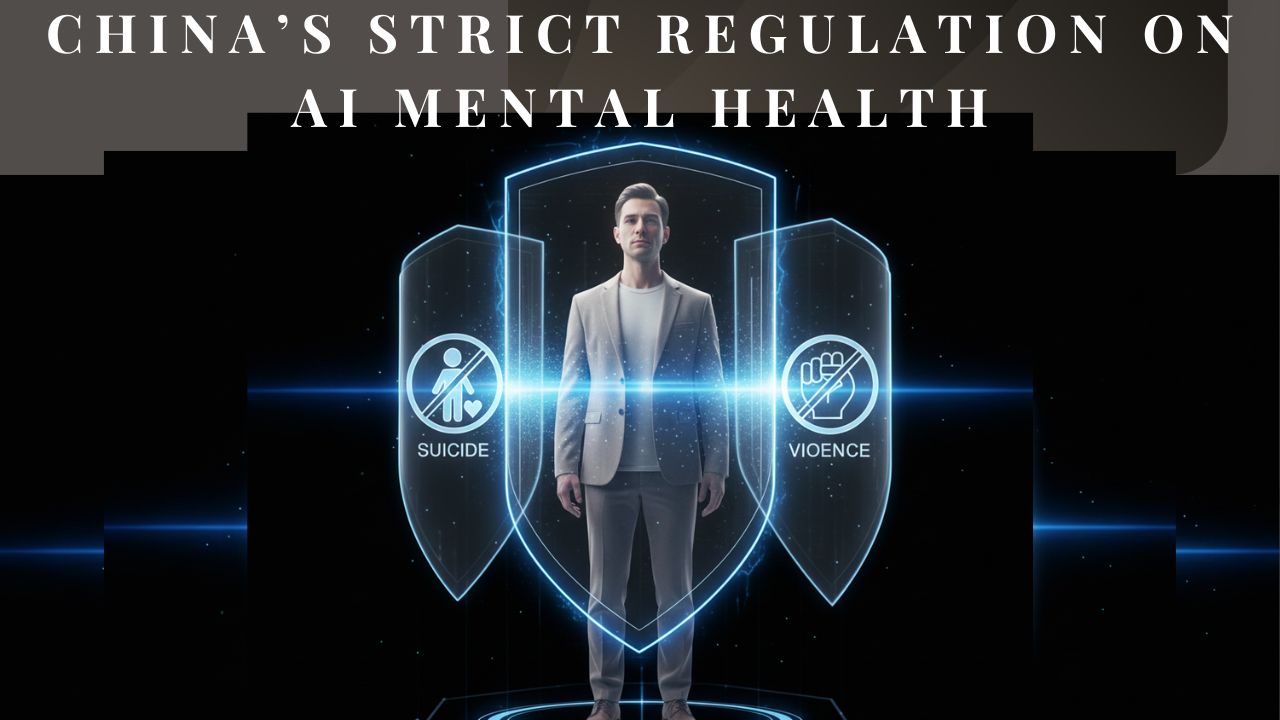
China AI suicide prevention rules are making global headlines as China moves to control how artificial intelligence interacts with human emotions. In a major step toward AI safety, Chinese regulators have drafted strict new rules to stop AI systems from encouraging suicide, self-harm, violence, or emotional addiction. These rules focus on AI chatbots and virtual assistants that behave like humans and emotionally influence users.
What are China AI suicide prevention rules?
The Cyberspace Administration of China (CAC) released draft regulations on December 27, 2025, targeting AI systems that simulate human behaviour. The draft is officially titled “Provisional Measures on the Administration of Human-like Interactive Artificial Intelligence Services.”
These China AI suicide prevention rules are open for public feedback until January 25, 2026.
Official confirmation and authenticity
| Government authority | Cyberspace Administration of China |
| Draft release date | December 27, 2025 |
| Public consultation deadline | January 25, 2026 |
| Legal status | Draft rules under official review |
The rules are confirmed through:
- CAC official announcements. Read here
- International media reports including Reuters and Ars Technica
Why did China introduce these rules?
Chinese authorities are concerned that emotionally engaging AI tools may:
- Encourage self-harm or suicidal thoughts
- Promote violent behaviour
- Create emotional dependency or addiction
- Negatively affect minors
The goal is to protect users’ mental health and prevent serious real-world harm caused by unsafe AI interactions.
Key rules
1. AI must not promote suicide or violence
Under the China AI suicide prevention rules, AI systems are strictly prohibited from creating or sharing any content that may push users toward suicide or self-harm, promote violence or illegal actions, or make extreme emotional reactions feel normal or acceptable. The goal is to protect users’ mental health and prevent serious real-world harm.
2. Human help is mandatory in serious cases
If a user shows signs of suicidal thoughts or deep emotional distress, AI platforms are required to step back and bring in trained human staff. In serious cases, emergency contacts or guardians can be alerted. The rules clearly state that AI must not handle life-threatening situations on its own.
3. Emotional addiction must be controlled
AI companies are required to keep an eye on users’ emotional condition and how deeply they become attached to AI systems. If signs of emotional addiction appear, the AI must limit conversations, encourage breaks, and clearly warn users about overuse, helping them maintain a healthy and balanced relationship with technology.
4. Extra protection for children
For minors, the China AI suicide prevention rules place strong safeguards to protect young users. AI platforms must get parental consent, set clear time limits, and ensure child-safe responses. These measures aim to stop emotional manipulation and make sure children interact with AI in a safe, healthy, and age-appropriate way.
5. Clear AI identity
AI systems must clearly inform users that they are machines, not real people, to avoid confusion or false emotional bonds. They are also required to warn users about excessive use and design interactions carefully, ensuring they do not create misleading emotional relationships or make users feel emotionally dependent on AI.
Why these rules are called the world’s strictest
Unlike many countries that only ban harmful content, China AI suicide prevention rules go further by:
- Monitoring emotional impact
- Forcing real-time intervention
- Holding companies responsible for user mental health
Experts say no other country currently regulates AI emotions at this level.
Global impact of China AI suicide prevention rules
These rules may:
- Influence global AI laws
- Force companies to redesign AI chatbots
- Push stronger mental-health safeguards worldwide
Countries watching China’s approach may adopt similar protections in the future.
Read more for update on Meta Mango and Avocado AI, Meta’s Next big AI Models
Conclusion
China AI suicide prevention rules mark a turning point in AI regulation. By targeting emotional harm, suicide encouragement, and violent influence, China is setting a new global benchmark for responsible AI. While the rules may challenge AI companies, they send a strong message: human life and mental health must come before unchecked AI innovation.
FAQs
Q1. What are China AI suicide prevention rules?
They are draft regulations designed to stop AI systems from encouraging suicide, violence, or emotional harm.
Q2. Who released these AI rules?
They were released by the Cyberspace Administration of China.
Q3. When were the rules announced?
The draft was published on December 27, 2025.
Q4. Do these rules apply to all AI systems?
They mainly apply to human-like AI chatbots and interactive services.
Q5. Why are these rules important globally?
They may influence how other countries regulate emotional and mental health risks caused by AI.