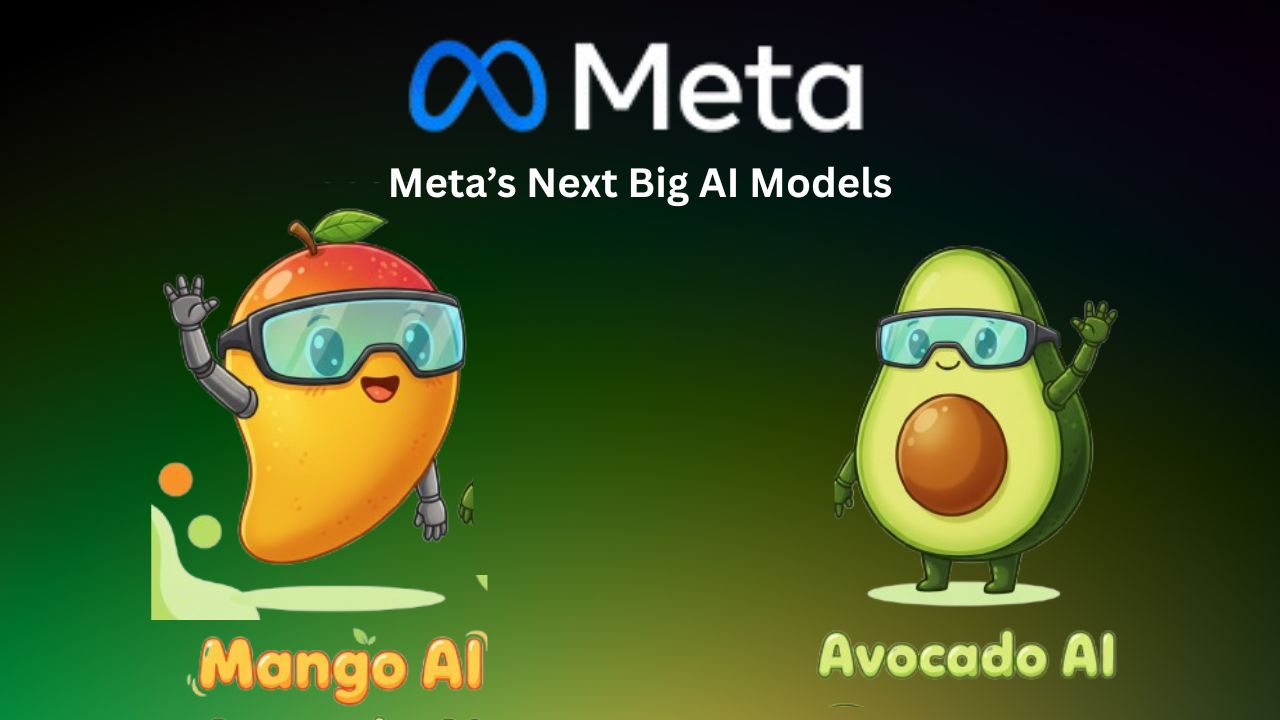
Meta is quietly preparing for its next major move in artificial intelligence. Two upcoming AI models, known internally as Meta Mango and Avocado AI, are expected to define the company’s future in image, video, and language intelligence. These models have not yet been officially launched, but reliable global tech reports reveal that Meta Mango and Avocado AI are already in advanced development stages and Meta plans to debut these models in 2026.
From creators and businesses to developers and everyday users, Meta Mango and Avocado AI could shape how people create content, communicate, and use AI-powered tools across Meta platforms.
Together, Mango and Avocado show Meta’s clear push toward smarter, more creative AI.
What Is Meta Mango and Avocado AI?
Meta Mango and Avocado AI are codenames for two different but connected artificial intelligence models being built by Meta.
- Meta Mango AI focuses on images and videos
- Meta Avocado AI focuses on text, reasoning, and coding
Together, Meta Mango and Avocado AI represent Meta’s plan to combine visual creativity with smarter language understanding.
Meta Mango AI: Image and Video Intelligence
Meta Mango AI is designed to work with:
- Image creation
- Video generation
- Visual editing
- Multimodal content understanding
Both the tools are expected to power future tools on platforms like Instagram and Facebook, where video and visual content dominate.
For creators, both Mango and Avocado models could make professional-quality content easier to produce without expensive software.
Meta Avocado AI: Advanced Language Model
Meta Avocado AI is a large language model (LLM) built to:
- Answer complex questions
- Write and understand code
- Improve logical reasoning
- Provide more accurate responses
Unlike older models, both the models aim to be more practical, safer, and more useful in real-world applications.
Who Confirmed both the models?
The internal details about Mango and Avocado AI models were shared during discussions led by Alexandr Wang,Meta’s Chief AI Officer, who currently heads Meta’s advanced AI strategy.
While Meta has not released a public announcement yet, multiple trusted media outlets confirmed that Meta Mango AI and Meta Avocado AI are active internal projects.
Read it here by Techmeme
Expected Launch Timeline
Based on reported internal discussions:
- December 2025: Information surfaced publicly
- First Half of 2026: Targeted debut window
It is important to note that both Mango and Avocado AI models launch dates are internal targets and not final public launch dates so they may change.
Why both the AI tools Matters?
Mango and Avocado AI models matter because they:
- Strengthen Meta’s AI competitiveness
- Support creators and developers and save time
- Improve AI tools inside everyday apps
- Power smarter AI assistants present
By combining visual and language intelligence, both the tools can support the future of social media, advertising, and digital creation. They are built for real-world use, not just research.
India-Focused Impact of Meta Mango and Avocado AI Tools
India is one of the world’s largest markets for:
- Short videos and reels
- Digital creators and influencers
- Developers and startups
These tools could help Indian creators produce better videos, help businesses create ads faster, and support developers with smarter AI tools.
Read more on Meta acquires Limitless: A Big Move in AI Wearables
How Creators May Benefit from the two tools
For creators, Meta Mango and Avocado AI could:
- Reduce video editing time
- Improve content quality
- Support regional and local content
- Enable AI-assisted creativity
This makes them especially relevant for India’s creator economy.
How Developers May Use these
Developers could use these tools for:
- Code generation and debugging
- AI-powered apps and chatbots
- Faster product development
Both Mango and Avocado tools can become valuable tools for startups and software teams.
Is There Any Government Confirmation?
As of now no government website has confirmed and no regulatory filing has been released on Meta Mango and Avocado AI
The authenticity of these AI tools comes from trusted tech journalism, not official government sources.
Read here about the models
How these AI Models Compare to Other AI Models
Both the AI models will compete with:
- Other multimodal AI models
- Advanced language models
- AI tools for creators and developers
Meta’s advantage lies in its massive user base and deep integration across platforms.
Possible Challenges for Mango and Avocado AI tools
Some challenges include:
- AI safety and misuse
- Content authenticity
- Regulatory compliance
Both, Mango AI and Avocado AI will need strong safeguards before public release.
How Users May Expect to Benefit in the Future
Once launched, users may see:
- Improve AI features inside apps such as Instagram and Facebook
- Smarter chat and creation tools
- Offer smarter content suggestions
- Faster video and image editing
- Enhance digital creativity tools
For users, this means more helpful and intelligent experiences.
Conclusion
Mango AI and Avocado AI, both represent the company’s future vision for artificial intelligence. With Mango handling visual creativity and Avocado powering intelligent text and reasoning, Meta is clearly preparing for the next phase of AI innovation.
By combining powerful visual generation with advanced language reasoning, these tools can reshape how creators, developers, and businesses use AI.
While official announcements are still pending, 2026 could mark a major milestone for Meta Mango AI and Meta Avocado AI both.
FAQs
Q1. What is Meta Mango AI?
Meta Mango is an AI model focused on image and video generation.
Q2. What is Meta Avocado AI?
Meta Avocado is a large language model designed for text, reasoning, and coding.
Q3. When will Meta Mango and Avocado AI launch?
They are expected to debut in the first half of 2026.
Q4. Are these models officially launched?
No, they are still under development.
Q5. Will Meta Mango and Avocado AI be available in India?
India is expected to be an important market once launched.
Q6. Is there government confirmation?
No government website has yet confirmed these models.