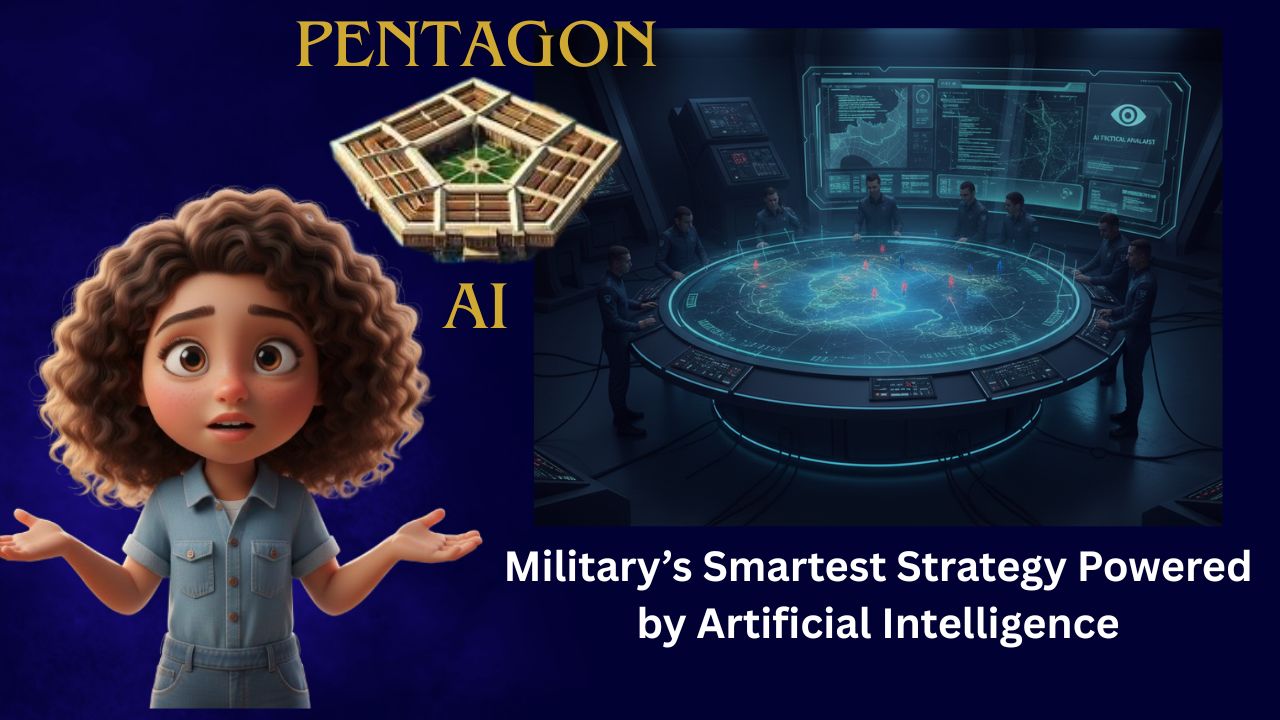
Something big is happening quietly inside the defence technology world. The United States military is asking major AI companies to allow advanced models to operate on secret military systems with fewer limits. This Pentagon AI classified networks move is not just about software access. It could reshape modern warfare, global politics, and even civilian technology in the coming years.
What is the Pentagon trying to do:
Recently reports confirmed the U.S. Department of Defence wants powerful artificial intelligence tools deployed inside highly secure systems. These are called classified networks. Normally AI companies add safety blocks so systems refuse certain harmful instructions. But the Pentagon AI classified networks proposal asks for fewer refusals when tasks are legal under military rules.
In simple terms, the military does not want an AI assistant that says “I cannot help with that” during a mission.
Instead, it wants an AI that can support real operational decisions.
The Facts:
The Pentagon is urging major AI firms including OpenAI, Anthropic, Google and xAI to provide AI access inside classified networks with fewer restrictions.
Pentagon Chief Technology Officer Emil Michael told executives the military wants AI across all classification levels.
An official stated:
The Pentagon is “moving to deploy frontier AI capabilities across all classification levels.”
Why the military wants this:
Modern battlefields produce massive data. Satellites, drones, radar feeds and cyber signals all generate information every second. Humans cannot process it fast enough. That is where the Pentagon AI classified networks plan comes in.
AI can analyse patterns quickly. It can identify suspicious movement, compare intelligence reports and recommend actions faster than any team of analysts. Military planners believe faster decisions mean fewer surprises and better protection for soldiers.
What AI could actually do:
This is not about robots replacing generals. At least not yet. The Pentagon AI classified networks system would mainly support people by helping with:
- Mission planning
- Threat detection
- Cyber defence
- Drone coordination
- Target assessment
Humans would still approve actions, but the decision window could shrink from hours to minutes.
The Hidden Context : The AI War Race
The Pentagon’s push is part of a long-term strategy.
The U.S. has been building military AI for years:
| Year | Program |
|---|---|
| 2017 | Project Maven (AI analyzing drone footage) |
| 2018 | Joint AI Center created |
| 2022 | Chief Digital & AI Office formed |
| 2025 | $200M contracts with AI firms |
| 2026 | Classified network AI push |
Project Maven was designed to spread AI across defense operations.
Why companies are cautious:
Technology companies design safety guardrails for a reason. AI sometimes produces confident but wrong answers. In normal situations that means a wrong article or bad coding suggestion. In military operations that could mean something far more serious.
That is why some developers worry about reducing safeguards inside Pentagon AI classified networks environments. A mistaken recommendation in combat cannot simply be corrected later.
The biggest concern: Speed vs Judgment
Here is the real debate.
Military leaders say faster analysis saves lives. Researchers say faster decisions can skip moral checks.
If commanders rely too heavily on AI suggestions, they may trust the system automatically. Psychologists call this automation bias. Humans tend to believe machines especially under pressure.
So, Pentagon AI classified networks might not remove human control, but it could reduce human hesitation.
Possible consequences for warfare:
This change could transform conflicts in three major ways.
- First, wars could move faster. Decisions that once took hours could happen in seconds.
- Second, early strikes may increase because countries react instantly to perceived threats.
- Third, fewer soldiers may be deployed initially, lowering political resistance to conflict.
Together these effects make wars easier to start but harder to stop.
Cybersecurity risks:
Placing advanced AI inside secure military systems also creates a new attack target. Hackers may try to manipulate data feeding the AI. If false information enters the system, the output could become dangerously misleading.
So, the Pentagon AI classified networks initiative is not just a military experiment. It is also a cybersecurity challenge.
Verified Facts Confirmed:
| Reported by | Links |
|---|---|
| Reuters (Dated February 12, 2026) | Pentagon requested AI tools on classified networks,Disagreements over safeguards,AI errors could be dangerous |
| CNA (Dated February 12, 2026) | Fewer restrictions than civilian systems |
| Devdiscourse (Dated February 12, 2026) | Targeting and mission planning use cases |
| Inshorts (Dated February 12, 2026) | Negotiations with OpenAI, Google, Anthropic, xAI |
Global Impact:
Other countries are watching closely. If the United States integrates operational AI deeply into its defence systems, rivals will accelerate similar programs.
This can create a chain reaction known as a technological arms race. Instead of competing with missiles, nations compete with algorithms.
What it means for civilians:
History shows military technology often becomes everyday technology. GPS, the internet and advanced materials all started as defence projects.
AI developed through Pentagon AI classified networks may later influence policing tools, emergency response systems and infrastructure management. That makes this discussion relevant not only to soldiers but to ordinary citizens worldwide.
Read more on how Americans Turn to AI at Work: Trends, Consequences, and the Future of Employment from 2026
The real question:
The debate is no longer whether AI will be used in defence. That is already happening. The question is how much independence we give machines when decisions matter most.
The Pentagon AI classified networks initiative represents a shift from AI as a tool to AI as a strategic partner.
And once that line moves, it rarely moves back.
Conclusion:
We are witnessing the beginning of a new era.
The Pentagon is not simply adopting AI, it is trying to operationalize AI inside classified military decision systems.
If successful, wars may shift from:
Human-paced conflicts to machine-paced conflicts
So, we can say the Pentagon AI classified networks plan shows how quickly technology is entering national security decisions. Faster analysis may improve defence readiness, but reduced safeguards carry risks. The world now faces a balance between speed and responsibility, and that balance will shape future conflicts and everyday technology.
FAQs
1. Are the military building killer robots?
No, current plans focus on decision support systems. Humans still approve actions.
2. Why remove AI restrictions?
The military wants faster assistance during lawful operations without refusals interrupting missions.
3. Could this start an AI arms race?
Possibly. Other nations may accelerate similar technology.
4. Will civilians be affected?
Yes, defence technology often becomes public technology later.
5. Is this happening now?
Yes, discussions and early deployments are already underway.